 |
in perfect Love, in perfect Trust, Eight words the Wiccan Rede fulfill: An ye harm none, do as ye will. What ye send out comes back to thee, So ever mind the rule of three. Follow this with mind and heart, and Merry ye Meet, and Merry ye Part. |
|
|
in perfect Love, in perfect Trust, Eight words the Wiccan Rede fulfill: An ye harm none, do as ye will. What ye send out comes back to thee, So ever mind the rule of three. Follow this with mind and heart, and Merry ye Meet, and Merry ye Part. |
Wicca is an Initiatory Mystery Religion. Initiatory means that those who become Wiccans need to become Initiated, a process and ceremony accepting someone into the Wiccan religion. Mystery means that Wiccan practice includes religious mysteries. A religious mystery is something that has to be experienced because it cannot be described or explained.
Wicca is a religion of clergy. Those who follow Wicca and practice with a Wiccan church generally become a Priest or Priestess of our religion. In a few places there may be congregations of lay Wiccans, but for the most part we are few in number and our members all are working toward participation in our Priesthood.
The People of the Woods Church of the Old Religion is a congregation of the old Native European religion, also called the Wicca or Witchcraft. Members of the church get together to celebrate the ancient festivals that mark the natural cycles of the year. Some of our religion has been transmitted through oral tradition that is thousands of years old. It is the mission of our church to rediscover the lore and practice that were lost in the persecutions of the middle ages. Some of the rediscovery or recreation was done in the 20th century and some continues to this day. We are creating a new culture that echoes the pagan villages of the past. Members of The Church meet for the ancient festivals days of Imbolc, Beltane, Lughnassad, and Samhain, and also the solar events, solstices and equinoxes. We observe these festival times with ritual, feasting, fun, and pleasure. Sometimes we join other pagan groups from the Spokane area for a community celebration. Sometimes we travel to regional or national Pagan or Wiccan gatherings. We practice the Old Ways in our lives, based on love and acceptance of the earth and ourselves as fundamentally good.
"But I don't like the word "church" " is a fairly common initial reaction among people first coming to Wicca. Many of our people have had negative reactions to other religions and their churches. We understand that. We've been there. We didn't like the other religions and their churches either. But the word "church" is OUR word from OUR religion. OUR ancient sacred places were called "circles". For a very long time our circles were marked with standing stones. In Old English a "circle" was pronounced "kirk". When the new religion came into power they stole our sacred places and built their buildings on top of our sacred circles, our kirks. OUR people who still wanted to return to our sacred "kirk" had to go to their buildings. Over time the "k" or hard "C" sound softened into a "ch" sound. Kirk became chirch or "church". The root meaning of "church" is a sacred circle, OUR sacred circle. We reclaim our sacred circles and our old words. We are a Circle, a Kirk, a Church of the Old Religion.
We call ourselves the "Old Religion" because we recognize and honor Gods and Goddesses who have been with mankind since the Proto-Indo-European culture emerged in central Eurasia about the same time that homo-sapiens were becoming our normative species. Our church focuses on the ancient Horned God of the forests, sometimes called Cernunnos, which means Horned God. The Horned God is still honored by many names in many languages and cultures derived from Proto-Indo-European. So it is with us. Likewise we honor the ancient Goddess of love and fertility who also has been known by many names down through the ages in many cultures. Wicca is Pantheistic, meaning that we recognize and honor many Gods and Goddesses. Our members often are called by an individual God or Goddess for special focus. Divinity is within us and all around us.
Wicca is a religion and a way of life based on the natural cycles of the Earth, and the natural cycles of human life. We celebrate the events of the natural cycles, such as full and new moons, equinoxes, and solstices, to attune ourselves to the Earth's rhythms. Being in tune with the Earth helps us to feel and rejoice in our physical and spiritual reality as part of the good Earth. Wicca is one of the few nature religions to have survived the spread of christianity. For hundreds of years, christianity and pagan ways coexisted; christianity spread mostly in the cities and paganism continued to flourish in the countryside. Then in the late middle ages the conflict between these two ways exploded into Witch hunts. Practice of the Old Ways was almost eradicated; much lore and history were lost. But the oral tradition persisted despite persecution.
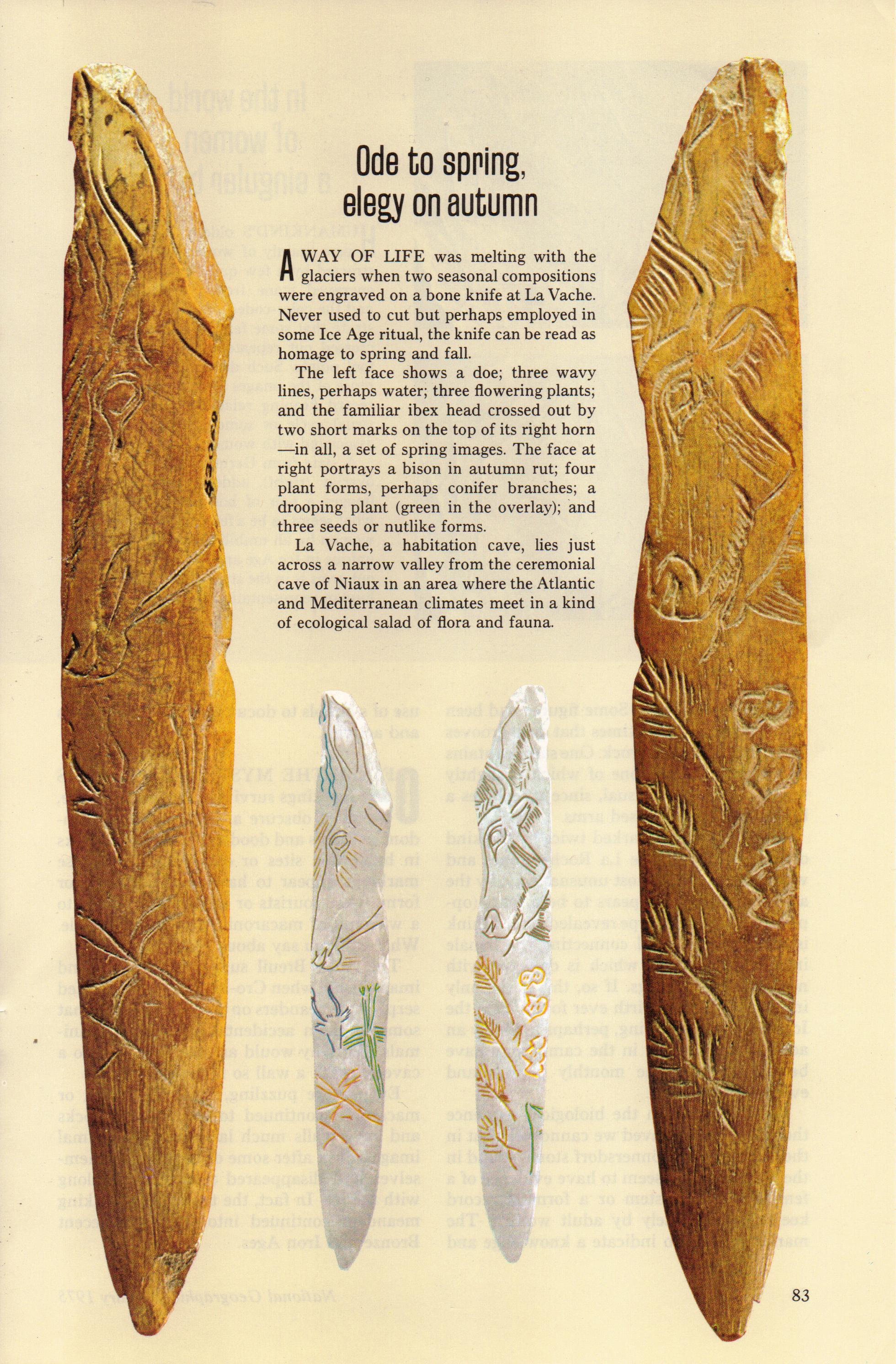
The great ice age was still melting when a prehistoric Witch created and used this ceremonial knife, now called an "athame." Notice that this blade it has a balance of male and female, one side for each. Whomever carved and used this purely ceremonial blade would likely find a home in our circle today.
The Old Ways have survived, changed by time and local practices and the genius of those through whom they have come to us. And now as we move into the twenty-first century, the Old Ways survive and change still. We have a vision of a new culture based on joy and love, rejecting the fear and shame that permeate every monotheist culture. We work to create this culture by changing ourselves, by living daily in a way that demonstrates acceptance of our bodies and our connections with the Earth. Each of us was created in love and beauty. We do not try to convert others, trusting them to find their own paths. But we love our path. We believe that the ancient pagan way of life is the natural spiritual path of all beings.
The Church is concerned with helping members to identify and shed the internalized values of the surrounding culture, values that we have each inherited to some extent, often without being aware of them. Western monotheist dominated culture operates on values that oppress the human spirit and repress human feelings. Civil law often codifies christian morality. Literature, movies, and popular songs express the perspectives of a culture founded on a religion whose values are radically different from paganism in general and from Wicca in specific. Even such an apparently basic concept as "right" versus "wrong" stems from the black-and-white thinking of monotheistic religion. In many ways, pagans are an occupied culture. We seek to create a culture with different values, a culture based on acceptance of human needs and feelings, a culture focused on enjoyment of life.
The Church is formed around a coven, which is the group of Priests and Priestesses trained in theology and religious leadership according to traditions of our religion, and dedicated to the work of The Church. Members of The Church who are interested in becoming clergy of our religion may apply to the coven. All coven members are expected to contribute their energy, work, and resources to The Church according to their abilities. We respect the confidentiality of members and participants. Names of individuals and activities at rituals are not revealed outside The Church without specific permission.
For much of the history of Wicca the religion was organized into secret "covens" or meetings of the clergy, similar to a religious seminary, monastery or convent. The coven structure still dominates Wicca, however there is a growing number of other people who think of themselves as Wiccan. You don't have to be part of Wiccan clergy to participate in our religion and church. Individual or "solitary" Wiccans are invited to our seasonal Sabbat. In addition there are often family of our members who also participate in our Sabbat events. If you want to be a lay member of our Wiccan Church, let us know that you would like to participate.
We suggest that serious seekers join our Coven and becoming an Initiated Witch and Priest or Priestess of Wicca. The heart of Wicca is an initiatory mystery religion, and the mysteries cannot be explained or learned from books. They can only be experienced. Lay members are welcome to participate with the church at most Sabbats, and outings such as attendance at regional pagan gatherings.
The following are some values we seek to incorporate in our lives that differ from those of the surrounding culture:
Divinity is immanent. The spirit and power of the God and the Goddess are present in the material world. Therefore, ourselves, our bodies, and our homes are sacred. Our needs and feelings are worthy of respect. Acting in harmony with the cycles of nature enhances our awareness of the God and Goddess within ourselves.
Life is naturally full of joy, pleasure, and abundance of good things. Life exists as a network of beings that work together and relate to one another. We question most of the moral taboos used by monotheistic religions to control and dominate people.
Each person accepts responsibility for finding his/her own truth and expressing his/her own feelings. We feel strongly that criticism and guilt are unhealthy. On the other hand, forgiveness is not a pagan value. Tell the truth, and include the details.
Pagan attitudes and practices concerning sin, shame, sex and other moral issues create a fundamental division between paganism and the conventional christian culture. The concept of "sin" is not part of our religion or moral values. We do not need to feel shame for our bodies or ourselves.
We understand that we and other humans were created in love and beauty. We do not accept a psychotic belief in "original sin" for which we must be forgiven or "saved." We reject beliefs that human bodies are shameful, or that physical pleasure is wrong. All acts of love and pleasure honor our Gods.
"An ye harm none, do as ye will" is the most common moral law of Wicca. The command or imperative part is "do as you will." Wicca gives you freedom to enjoy your life, to live a full, rich, wonderful life full of joy and pleasure. Wicca is full of freedom, and freedom is scary to many people who's lives were previously full of long lists of rules, do this, don't do that. Freedom can be a lot more freighting than being controlled. The only limits Wicca places on our freedom is a modifying phrase, "an" (meaning if) you don't hurt anyone. The old Gods want you to enjoy your life. Do as you will.
We also value taking personal responsibility for your life and your family, we value wealth and beauty, we value love for those with whom we share life and friendship, we value honesty, honor, charity, commitment, and work. Take care of yourself rather than being dependent on others. We value education, study, and learning on all subjects.
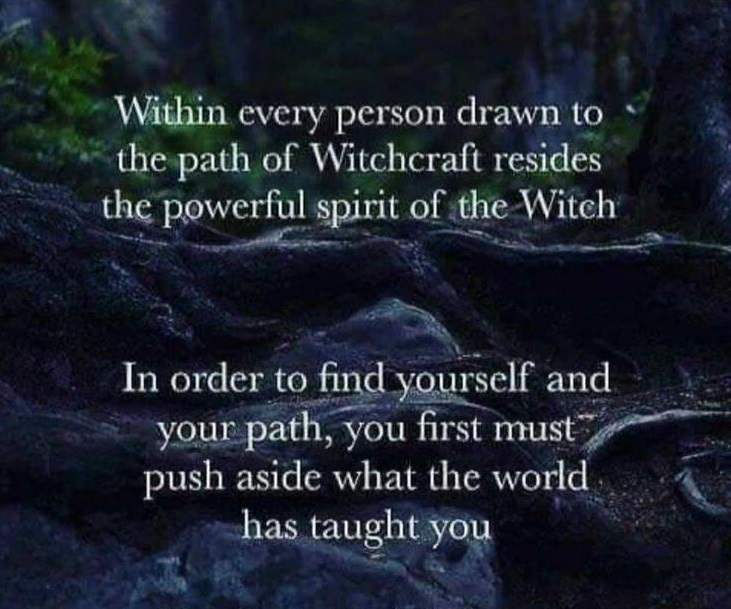
Sin, shame, guilt, right, wrong, and most "morality" are religious dogma from some other religion.
If nobody is being harmed, do as you will.
Wicca is an initiatory, mystery religion. A mystery is something that has to be experienced, and cannot be described. Wicca is an oath bound, magic-using, pagan religion and priesthood. Wicca is one of the old religions of pre-christian Europe. It is a continuation, or perhaps a recreation of the prehistoric Old Ways that were practiced by native peoples in the lands of our ancestors. According to Wiccan myth, it has been transmitted by oral tradition since Neolithic times, and augmented in historic times. Wicca is a nature religion, focusing on reverence for the Earth and all Her creatures. It is also magickal and shamanic. We try to live in love and harmony with all of the beings of the Earth. We explore feelings, intuition, and mystery as well as ideas. Wicca believes that divinity is immanent -- is in all things, including each person. We understand divinity as Goddess and God -- feminine and masculine. Our church honors the balance between God and Goddess, between Women and Man, between male and female. We object to those who place either above the other. Wicca is a positive, ethical religion with a complex system of moral and ethical values. Our primary rule is to listen to the Spirit within, and do as we will. Wicca is a joyful religion. We sing, dance, feast, and celebrate.
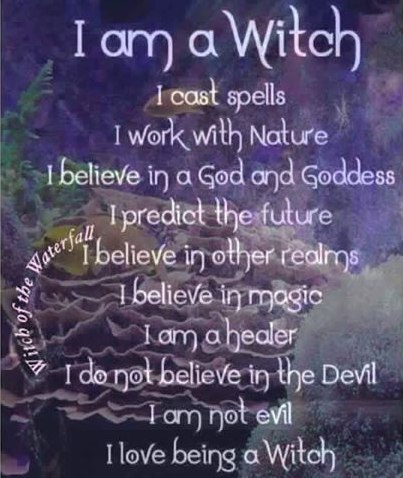
Wicca is not authoritarian. We have no gurus, popes, messiahs or scripture. Wicca is not christian. We do not believe in original sin, guilt, sacrifice, redemption, resurrection, or bodily shame. We are not New Age, Buddhist, Feminist nor channeled. Wicca is not devil worship. We do not recognize Satan, who is a demigod of another religion. Wicca is not a profit-making enterprise. There are no fees or charges for rituals or teaching except for organized seminaries. We have no paid ministers. We do have expenses that we sometimes ask our participants to share, and special events sometimes ask for donations to cover costs. Wicca does not proselytize or attempt to convert others; however, we believe that the ancient ways are more congruent with basic human nature than other religions.
In our view, Wicca is an initiatory, mystery religion, not a political movement. Many people today erroneously confuse Wicca with a left leaning political movement. This confusion was promoted by a few "neo-pagan" authors in the 1980s. Gerald Gardner, who brought Wicca into the public knowledge in the 1950s, was politically conservative. Some other Wiccan leaders have been politically liberal. But Wicca is neither. Wicca is not inherently anti-business, anti-industry, anti-nuclear power, anti-family, anti-hunting, or anti-war, though some Wiccans support those political views. Wiccans are Republicans, Democrats, Socialists, and Libertarians. Many have liberal views on some political issues and conservative views on other political issues. Wicca is a religion based on the old Gods and the old ways of pagan peoples. The People of the Woods Church of the Old Religion does not support or oppose partisan political groups and agendas. We are a religious body in celebration of the old Gods and old ways of pagan people.
Some people today erroneously believe Wicca is only "a woman's religion" and not religion for everyone. This confusion has been promoted by a few radical "neo-pagan" 1980s authors, such as Z Budapest and Starhawk who wrote misleading books. That was unfortunate. We have met couples who turned away from Wicca because they were seeking a religion that both the man and woman could participate in, and erroneously believed that Wicca was only "a woman's religion." A women only, or men only religion would create no future generations, and would soon vanish like the Shakers.
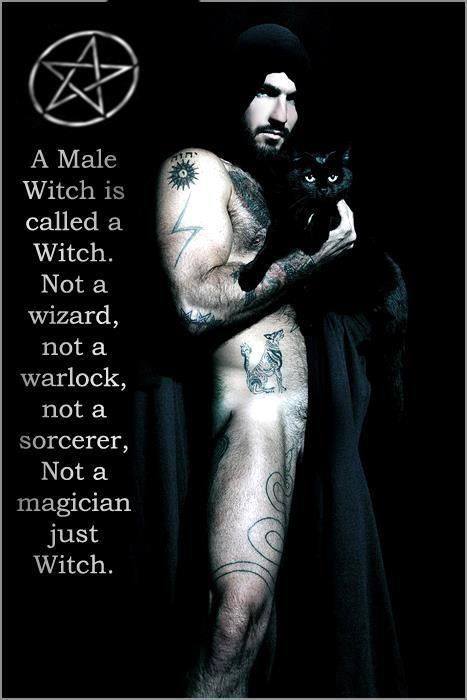
In our view, Wicca is a religion for everyone, for men, women, and families. Two of the best known Wiccan spiritual leaders of the 20th century were Gerald Gardner and Alex Sanders. Other well known men Wiccan writers and teachers have been Raymond Buckland, Stewart Farrar, Ed Fitch, Paul Huson, and Scott Cunningham. The Aquarian Tabernacle Church of Wicca - International, was created by Archpriest Pete Davis. Real Wicca is a family religion suitable for men, women, and children, a religion for whole communities. The People of the Woods has sometimes had more women than men members, and sometimes more men than women. Wiccan theology teaches respect and balance between Gods and Goddesses, between Priests and Priestesses, between men and women. As above, so below.
The People of the Woods Church of the Old Religion is located near Spokane, WA, USA. Our members need to live within a convenient distance. Our information below is specific to people in our area. For you other readers of this web site who live in other locations, we suggest that you look for a local Wiccan Church, Circle, or Coven on google "wicca, mytown," look on Facebook, or ask at a local pagan or occult shop.
In the last half of the 20th century most Wiccan congregations consisted of limited covens of dedicated people. The model was that every Wiccan is a Priest or Priestess to himself or herself, and covens offered training and practice somewhat equivalent to the religious seminary of other religions. As Wicca has grown rapidly we now find that there are many people who want to participate in our religion at a level below that of a Priest or Priestess. Some people are new to the religion, have read a few books, and need to experience Wiccan ways for a while without a serious commitment in the clergy. Some people have busy lives, families to raise, work to do, and want to participate in religious activities when their busy lives permit. Some people want to know that there is someone to call for special occasions in their lives, to celebrate rites of passage, bless babies, formalize weddings, and someone to talk to in times of stress. Not everyone wants to be a Priestess or Priest, but many want to have a church where they can be a member.
The People of the Woods operates both on the model of a Coven of Wiccan Priests and Priestesses, and on the model of providing Clergy to a wider Wiccan community. We hold coven members only rituals on the Full and New Moons, and we hold open rituals for families and friends on most Sabbats. We train Priests and Priestesses in our coven in the traditional 3 year apprenticeship model, and our Priests and Priestesses are available to provide clergy services to Wiccan folk throughout our community.
We will accept lay members who have compatible beliefs and want to be associated with a Wiccan church. For lay members we can provide a level of belonging in the local community. We sometimes hold educational discussion meetings on Wiccan theology and philosophy. Lay members may also receive invitation to occasional Sabbat participation, invitation to annual events, some level of pastoral counseling, rites of passage such as weddings, baby blessings and funerals, and a religious connection for your life. Lay members are encouraged to make some annual financial contribution to support the work of the church depending on their financial status. Please consider the following description before contacting us regarding membership in the church.
From time to time the People of the Woods Church of the Old Religion sponsors a weekly discussion group led by an experienced Wiccan Priest or Priestess. The discussion group is for those new to Wicca to ask questions and learn about our religion. There are many things you can't really learn from reading books.
Use the e-mail link below and let us know that you want to participate.
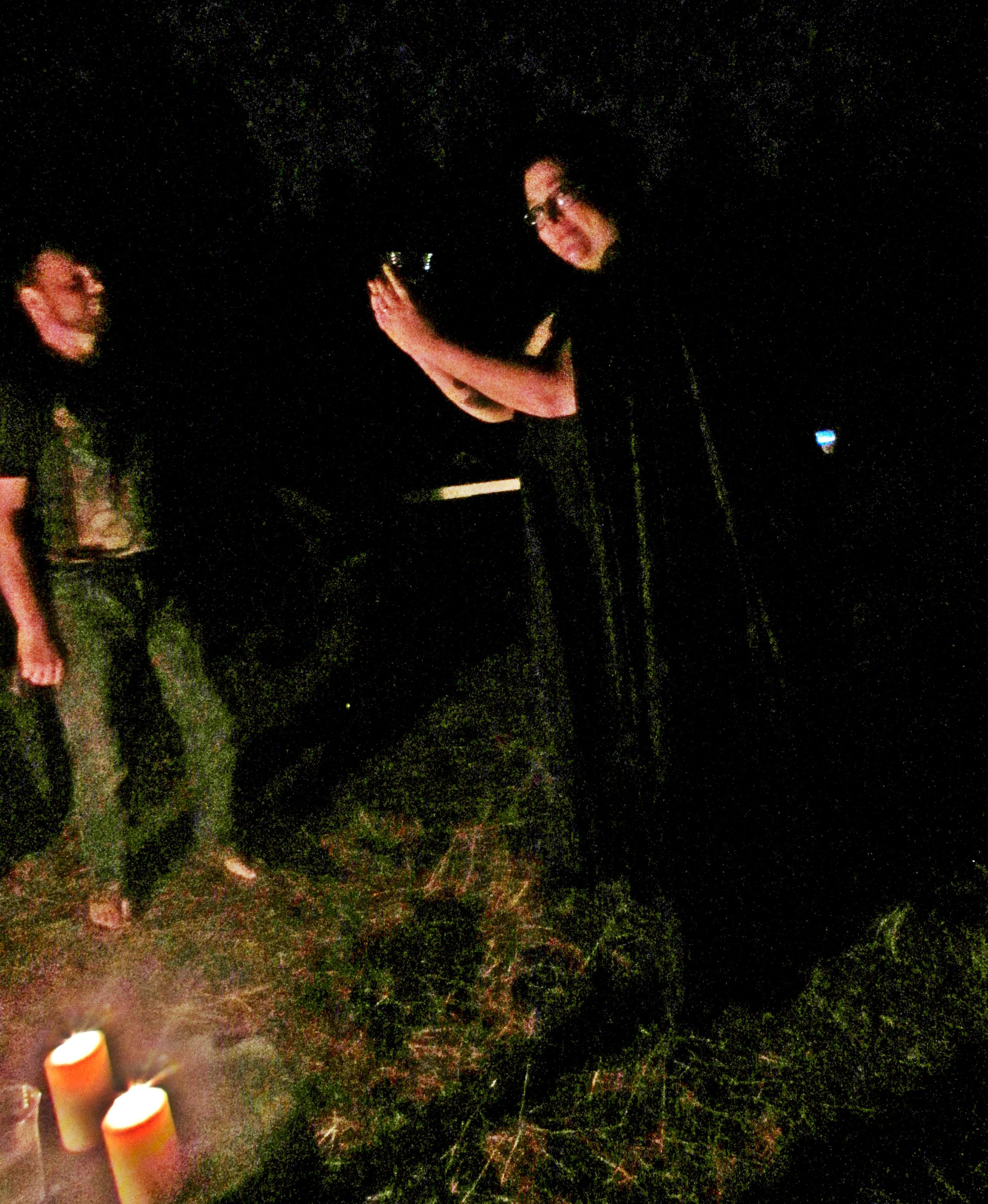
A Wiccan coven consists of Priests and Priestesses of our religion and those studying for the priesthood. Like other religions, joining the clergy requires a serious commitment, although there is an initial period of study prior to entry into the priesthood. We are willing to accept a limited number of sincere members who have compatible beliefs or who desire to learn and be initiated into our religion. Please consider the following additional specifics before contacting us regarding possible membership in the coven.
Click here to read more about the coven, requirements for members, question and answers, and the process to join.
Click here for a history or myth of the old ways.
Click here to read our Wiccan word definitions and usage.
To learn more about Wicca please see our list of recommended books on the recommended reading list page. Click here to jump to the reading list page. We have tried to select and recommend some titles by respected authors that give valuable information and historical perspective.
